Houston Technology · 2026
Houston Solar AC vs Other Inverter AC
Smart Cooling. Low Power. High Savings. Houston Solar AC combines solar power, BLDC technology and ultra-quiet operation to deliver up to 65% lower electricity bills compared to standard inverter ACs.
Only 600W
Power Consumption
Up to 65%
Annual Power Savings
≤ 22 dB(A)
Ultra Quiet
52°C
Operating Temp
Feature Comparison
Houston Solar AC vs Other Inverter AC
| Features | HOUSTON SOLAR AC | Other Inverter AC |
|---|---|---|
| Power Consumption | Only 600W | 1400W – 1800W |
| Electricity Usage | 0.6 – 0.7 Unit/Hour | 1.5 – 2 Unit/Hour |
| Solar Compatible | Yes ✓ | No ✗ |
| Battery Operation | Yes (196V DC) ✓ | No ✗ |
| Direct Solar Connection | Yes ✓ | No ✗ |
| Motor Type | BLDC Motor | Standard Inverter Motor |
| Convertible Modes | 7-in-1 Convertible | Limited / Basic Modes |
| Wide Voltage Range | 180V – 350V (AC/DC) | Normal Range (AC Only) |
| Refrigerant | R-32 (Eco Friendly) | R-410A / Others |
| Noise Level (Indoor) | ≤ 22 dB(A) (Ultra Quiet) | ≥ 30 – 40 dB(A) |
| Operating Temperature | Up to 52°C | Up to 46°C (Approx.) |
| Compressor Type | Variable Speed Compressor | Standard Inverter Compressor |
| Annual Power Savings | Up to 50% – 65% | Normal |
| Power Source Support | AC Grid / Solar / Battery | AC Grid Only |
| Star Rating | ★★★★★ 5 Star Rated | 3 – 4 Star Rated ★★★☆☆ |
Warranty Comparison
Better Warranty. More Peace of Mind.
| Warranty | Houston Solar AC | Other Inverter AC |
|---|---|---|
| On Compressor | 10 Years | 5 Years |
| On PCB | 5 Years | 2 Years |
| On Product | 1 Year | 1 Year |
✓ Total Assurance. Long Term Peace of Mind. | ⓘ Other brand warranty may vary by brand and model.
Why Choose Houston?
Why Choose Houston Solar AC?
Low Power Consumption
Only 600W
Save on Bills
Up to 65% Power Saving
Solar & Battery Compatible
Ensures Uninterrupted Cooling
Reduces Peak Power Load
Supports Grid Stability
Eco Friendly
R-32 Refrigerant, Low GWP
Ultra Quiet Operation
≤ 22 dB(A)
Choose Houston. Choose Smart. Choose Savings.
How It Works
How Houston's Solar Hybrid Engine Works
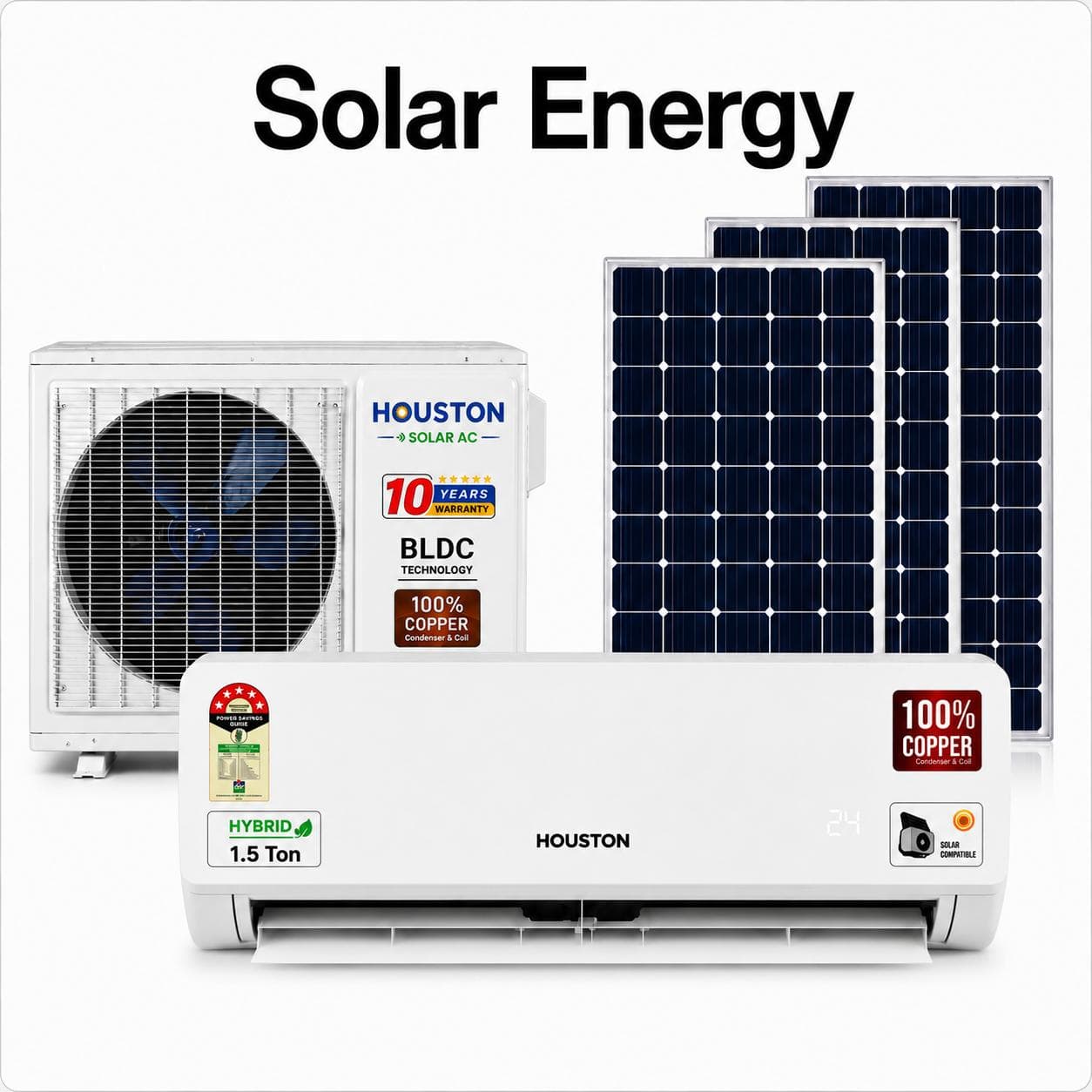
- Rooftop panels feed DC power straight to the BLDC compressor — no conversion losses.
- A smart controller tops up from the grid only when clouds or sunset cut panel output.
- The 100% copper condenser dumps heat faster, so the compressor works less in 50°C+ heat.
☀️ Daytime Operation
- Sunlight to Power: 5 × 550W panels convert sunlight into DC electricity.
- Direct Connection: DC power feeds directly to the AC unit.
- Grid on Standby: Grid remains connected but inactive — minimizing cost.
🌙 Nighttime Operation
- Seamless Transition: Changeover switch automatically selects grid power at sunset.
- Efficient Performance: Continues at 0.6 Units/hr on grid electricity.
- Voltage Stability: Handles wide grid range of 180V–380V.
Common Questions
Does a Houston Solar AC need batteries?
No. Houston solar hybrid ACs run directly on panel power in daylight and switch seamlessly to the grid after dark. Batteries are optional for power-cut backup.
How much electricity does a Houston Solar AC use?
Only 0.6 – 0.7 units per hour compared to 1.5 – 2 units per hour for a regular inverter AC — saving up to 50–65% on electricity annually.
What is the noise level of Houston Solar AC?
Houston Solar ACs operate at ≤ 22 dB(A) — ultra quiet, quieter than a whisper, making them ideal for bedrooms and study rooms.
Can it work during a power cut?
Yes! When the sun is out, Houston Solar AC can run on solar power directly — so you stay cool even during grid power cuts in daylight hours.
What is the operating temperature range?
Houston Solar AC is engineered to cool effectively up to 52°C outdoor temperature, compared to about 46°C for standard inverter ACs.